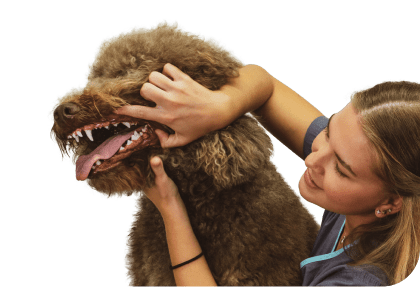











Is My Senior Dog Too Old for a Teeth Cleaning?
November 2, 2026At a glance
Is your senior dog too old for a teeth cleaning? Not necessarily. Age alone doesn’t determine whether a dog is a good candidate. Their overall health, comfort, and dental condition matter more. For appropriate senior dogs, anesthesia-free cleaning may be an option for removing visible plaque and tartar, while dogs with dental disease or other health concerns may need veterinary care first.
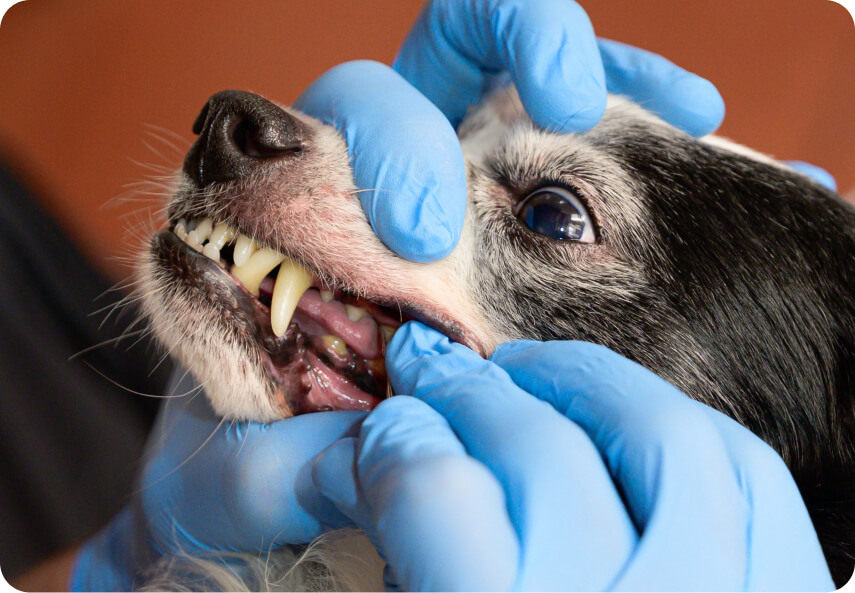
My dog is 12. Is he too old for a teeth cleaning?”
It’s a question we hear often from pet parents with senior dogs. As our dogs get older, it’s natural to worry about their comfort, health, and whether a dental cleaning is still a good idea.
The good news? Age alone doesn’t determine whether your dog can have their teeth cleaned. What matters most is their overall health, dental condition, and comfort.
Not sure about your dog’s dental health? Start with our free 60 second Pet Dental Assessment.

Is There an Age Limit for Dog Teeth Cleaning?
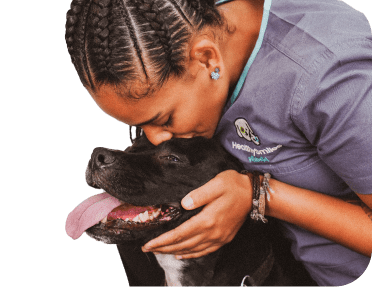
Gray muzzles are always welcome here! At HealthySmiles, getting older doesn’t mean missing out on dental care. Many of the senior dogs we see are between eight and sixteen, and we’ve cared for dogs as old as eighteen and nineteen. We look at each dog’s individual health, comfort, and needs to help determine the right approach.
Those golden-year smiles often deserve a little extra attention. Plaque and tartar can build up over time, making dental care an important part of caring for your dog through every stage of life.
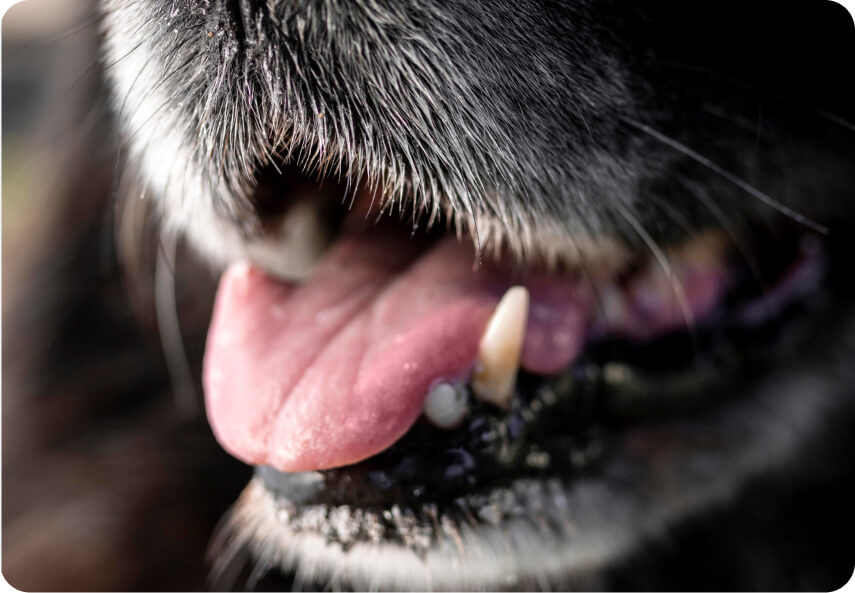
What Decides Whether an Older Dog Can Have a Cleaning
Every dog is different, especially as they get older. When considering an anesthesia-free cleaning for a senior dog, we look at three important factors.
Overall Health
Your dog’s medical history and current health are important considerations, specifically their heart, breathing or other health concerns.
Their Mouth and Dental Condition
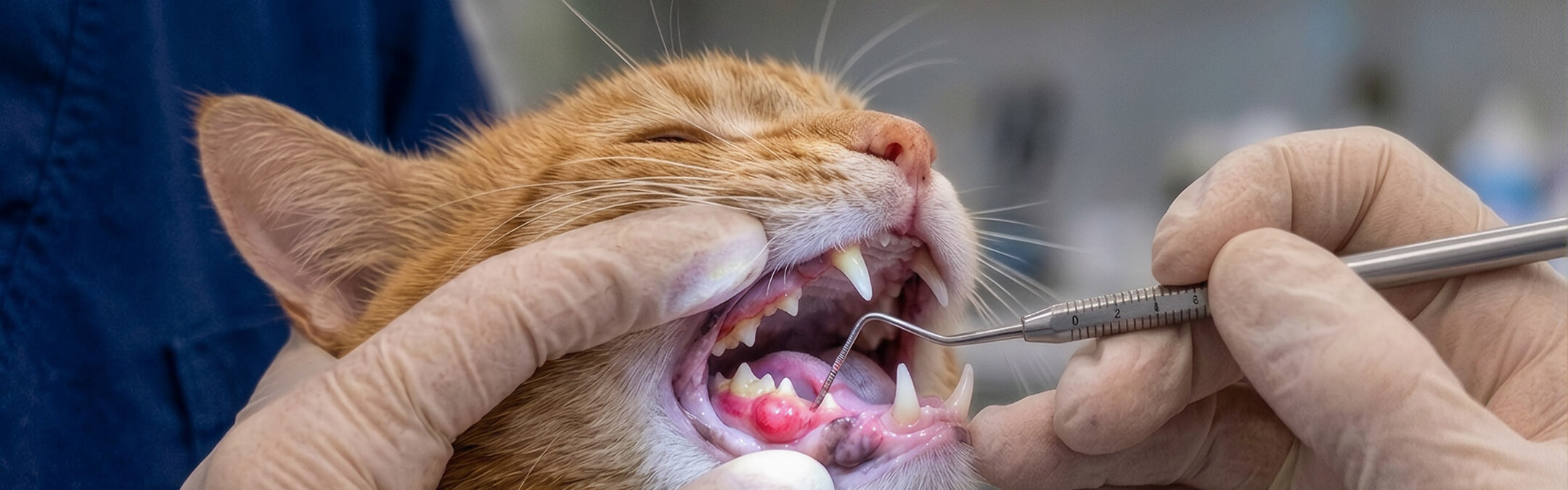
Our team looks for visible plaque, tartar, and signs of dental problems. While anesthesia-free cleaning can remove buildup, loose teeth, gum inflammation, fractures, or signs of infection may require veterinary evaluation and treatment.
Comfort and Temperament
Your dog’s comfort always comes first. Some senior dogs are comfortable being handled gently, while others may experience anxiety, discomfort, or difficulty remaining in position. We adapt our approach to each dog and stop if they become distressed.
Every visit begins with a gentle evaluation of your dog’s mouth and a check-in on how they’re feeling that day, so we can make sure they’re comfortable and ready before getting started.
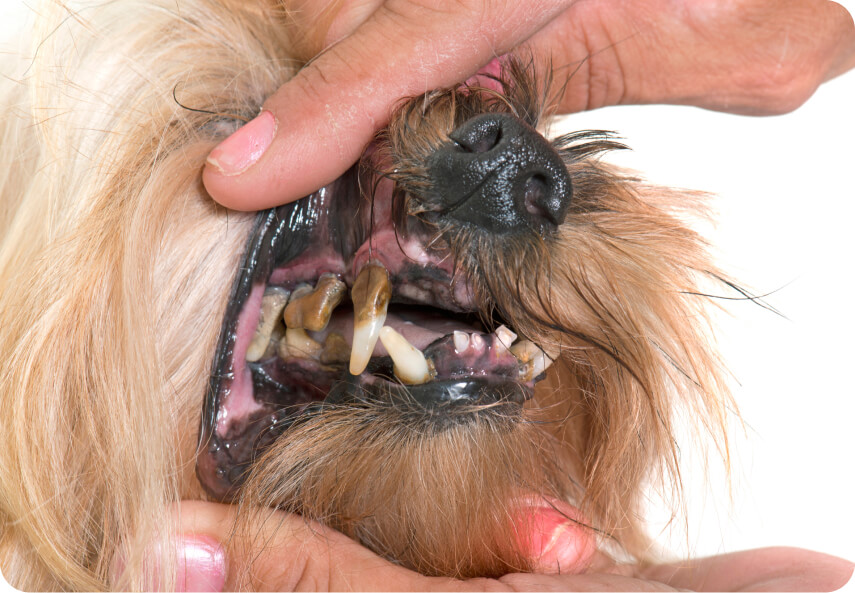
What If My Senior Dog Already Has Advanced Dental Disease?
Some dental problems require more than a routine cleaning.
If your dog has loose teeth, signs of infection, inflammation or fractured teeth, veterinary care should come first.
At HealthySmiles, we are honest about what we can and cannot do. We always evaluate before procedures and explain what we’re seeing and recommend that you consult your veterinarian before proceeding.
How We Keep Older Dogs Comfortable
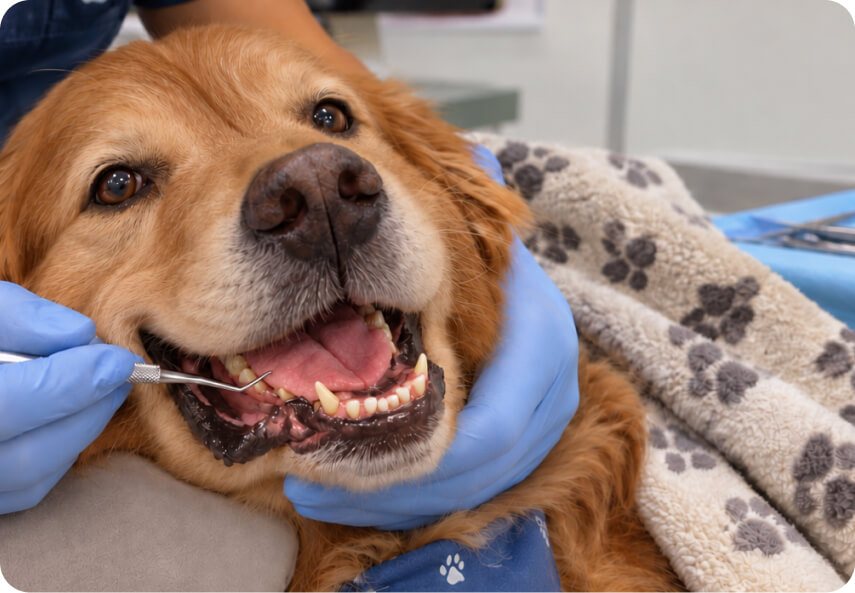
A cleaning takes about 45 minutes in a calm, quiet room. There is no anesthesia and no recovery time, so your dog goes home the same way they arrived.
For older dogs specifically, the visit is adapted: gentle swaddling for support, breaks every ten to fifteen minutes, time to stretch stiff joints, and a pace set by the dog rather than the clock. If your dog has had enough, we stop.
You go home with a comprehensive dental report for your records, which is useful to have alongside the rest of a senior dog’s health notes.
How Often Does a Senior Dog Need a Cleaning?
Every senior dog has different dental needs.
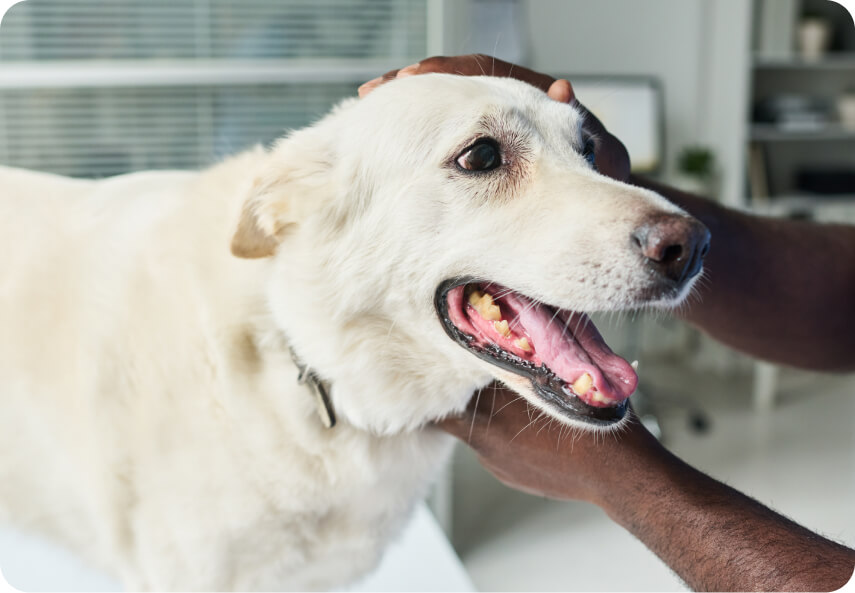
For dogs who are good candidates for anesthesia-free maintenance, HealthySmiles generally recommends a cleaning about every six months, along with consistent dental care at home.
Your veterinarian can help determine whether your dog needs more extensive dental care or a different cleaning schedule.
For more ways to care for your older dog’s teeth between visits, explore our guide to dental care for senior dogs.
With 16 years of experience and more than 100,000 cleanings performed, HealthySmiles is committed to providing gentle, individualized care for pets of all ages.
Not sure if your senior dog is a good candidate? We’re here to help you understand your options.
Frequently Asked Questions
Almost certainly not. There is no upper age limit, and most senior dogs we see are between eight and sixteen. What decides it is comfort and what the evaluation finds in the mouth, not age.
Every gray muzzle has different needs! Anesthesia-free cleaning may be an option for some older dogs, with no recovery from anesthesia afterward. The best choice depends on your dog’s health, comfort, and dental needs. We start with a gentle evaluation, and if your dog needs veterinary dental care, we’ll help guide you toward that next step.
If your dog has loose teeth, the best next step is a visit with your veterinarian. We’re happy to take a gentle look and explain what we notice. Your dog’s comfort comes first, so we’ll recommend veterinary care before moving forward with a cleaning.
A few signs can tell you it’s time for a dental check: persistent bad breath, yellow or brown buildup along the gumline, or red gums. Eating more slowly or chewing on one side can also signal discomfort and should be checked by your veterinarian. If you notice any of these changes, getting their mouth checked is a caring first step toward a more comfortable smile.
About 45 minutes to 1 hour, with breaks every ten to fifteen minutes and time to stretch. The pace follows the dog, so some visits run a little longer.
Those sweet gray-muzzle years arrive at different times for every pet! Many dogs are considered seniors around age eight, though larger breeds often reach that stage earlier than smaller ones. For cats, the senior years generally begin around age ten.