










Why Does My Cat’s Breath Smell?
October 6, 2026Most cat bad breath starts with plaque and tartar along the gumline. Daily home care helps slow it down, but once tartar has hardened, only a professional cleaning removes it. A smell that appears suddenly, or comes with a cat who is eating less, is worth a call with your veterinarian.
A little fishy after dinner is one thing. Breath that makes you turn your head when your cat comes in for a nose-to-nose hello is something else, and it is usually the mouth telling you something.
Cat bad breath, or halitosis, is one of the most common reasons pet parents start paying attention to their cat’s teeth. The good news is that the most common cause is also the most manageable one.
Not sure where your cat’s teeth stand right now? The free 60-second Pet Dental Assessment gives you a quick read in a couple of minutes.
What Causes Bad Breath in Cats?
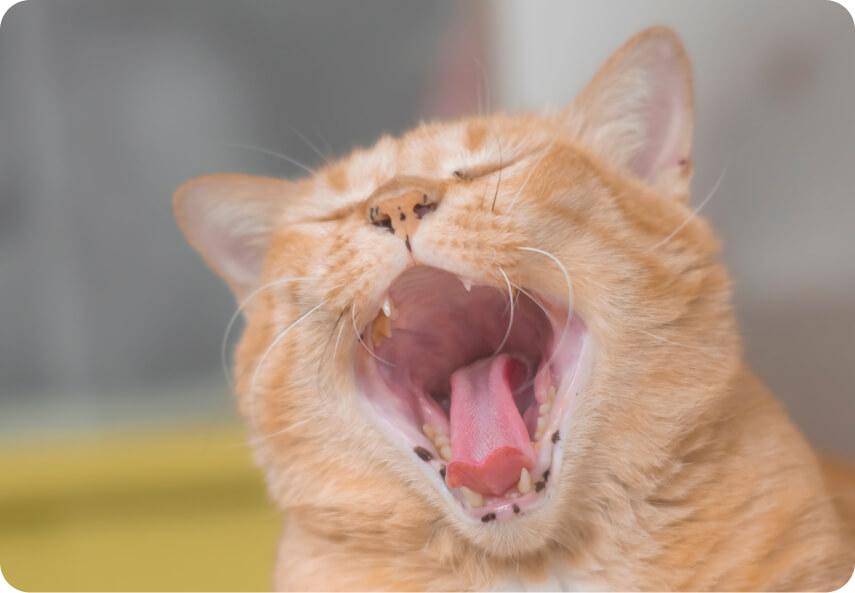
In most cats, the smell comes from plaque. Plaque is the soft, sticky film that forms on teeth every day, and the bacteria in it are what you smell. Left alone, plaque hardens into tartar along the gumline, the gums become irritated, and the odor gets stronger.
Other things can cause or add to bad breath in cats:
- Food, especially fish-based wet food, which gives a short-lived smell right after a meal
- Teething, in kittens around three to six months old
- Something caught in the mouth, such as a strand of grass or a piece of a toy
- A sore or inflamed mouth, which often comes with drooling or pawing at the face
- Health conditions beyond the mouth, which your veterinarian is the right person to rule out
If the smell goes away an hour after dinner, it was probably the dinner. If it is there all day, every day, it is time to look at the teeth.

What Does the Smell Tell You?
The type of odor is a useful clue, though it is never a diagnosis on its own.
- Fishy: often just the food, and it fades. When fishy breath hangs around between meals, plaque and tartar are the usual reason.
- Rotten or foul: the classic smell of built-up tartar and irritated gums, and the one that most often brings cats in for a cleaning.
- Sweet, or like ammonia: this one is not about the teeth. Call your veterinarian rather than waiting it out.
Any strong smell that appears suddenly, or arrives alongside drooling, eating on one side, or less interest in food, is worth a veterinary visit first.

Is Bad Breath Normal in Cats?
No. A healthy cat’s breath should be fairly neutral, even if it carries a hint of the last meal. Persistent bad breath is the earliest sign most pet parents notice that plaque and tartar are building up, which is why it is worth paying attention to rather than getting used to.
It is also common: by their third birthday, a large share of cats already show signs of periodontal disease. Cats are quietly stoic about mouth discomfort, so breath is often the first thing you can actually notice.
Why Does My Kitten’s Breath Smell?
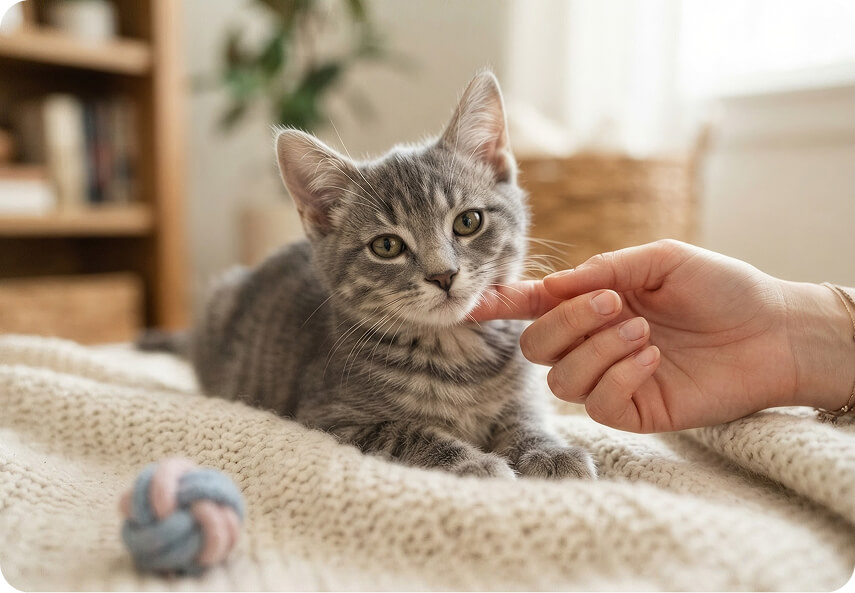
Kittens lose their baby teeth between roughly three and six months, and teething breath is usually mild and temporary. Keep an eye on it: if the smell is strong, or the gums look red and sore, book a check with your veterinarian.
Teething season is also the best time to get a kitten used to having their mouth handled. Our Polish and Play visits are built for kittens from three months to a year, and a first dental visit at that age makes every cleaning afterwards easier.
How Can I Freshen My Cat’s Breath at Home?
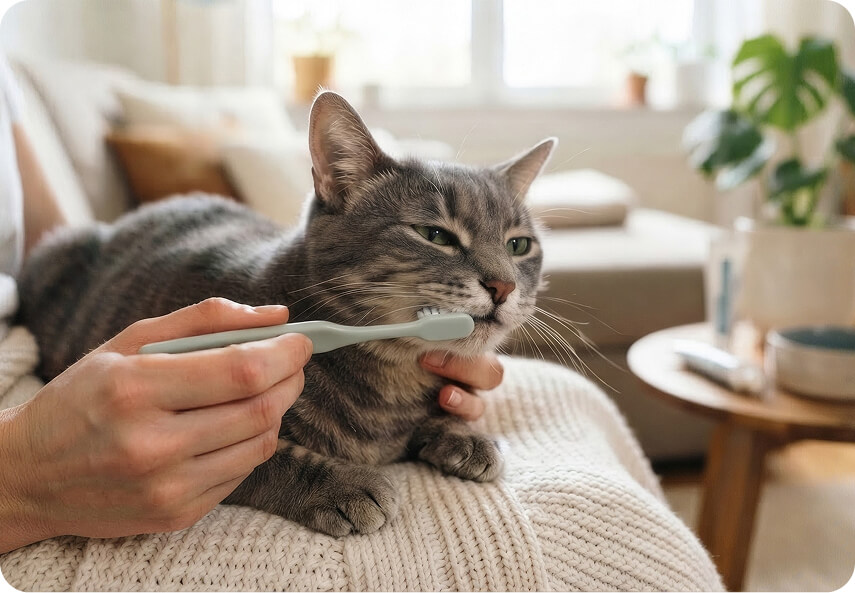
Home care is where you slow the buildup down. The routine that works is the one you can actually keep:
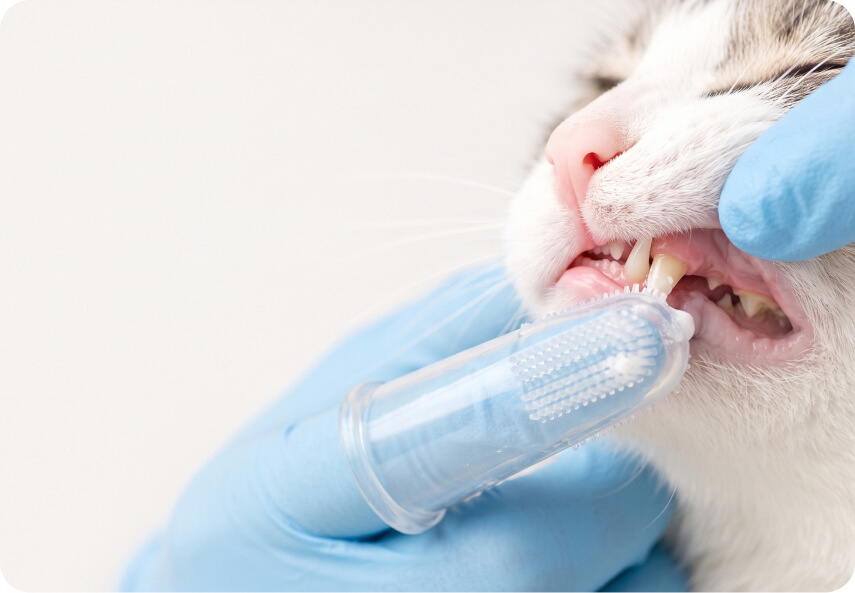
- Brushing with a cat-safe toothpaste, ideally daily, even if it is only the outer surfaces. Never use human toothpaste.
- Dental treats designed to reduce plaque, in a size made for cats.
- Water additives added to the water bowl as part of a daily routine.
- Dental wipes for cats who will not tolerate a brush but will sit for a quick wipe.
When you are comparing products, the Veterinary Oral Health Council (VOHC) Seal of Acceptance tells you a product has been reviewed for plaque or tartar control.
What home care cannot do is remove tartar once it has hardened. No treat, additive or wipe will take it off, and scraping at it at home risks the gums and the tooth surface.
When Does Bad Breath Mean It Is Time for a Cleaning?
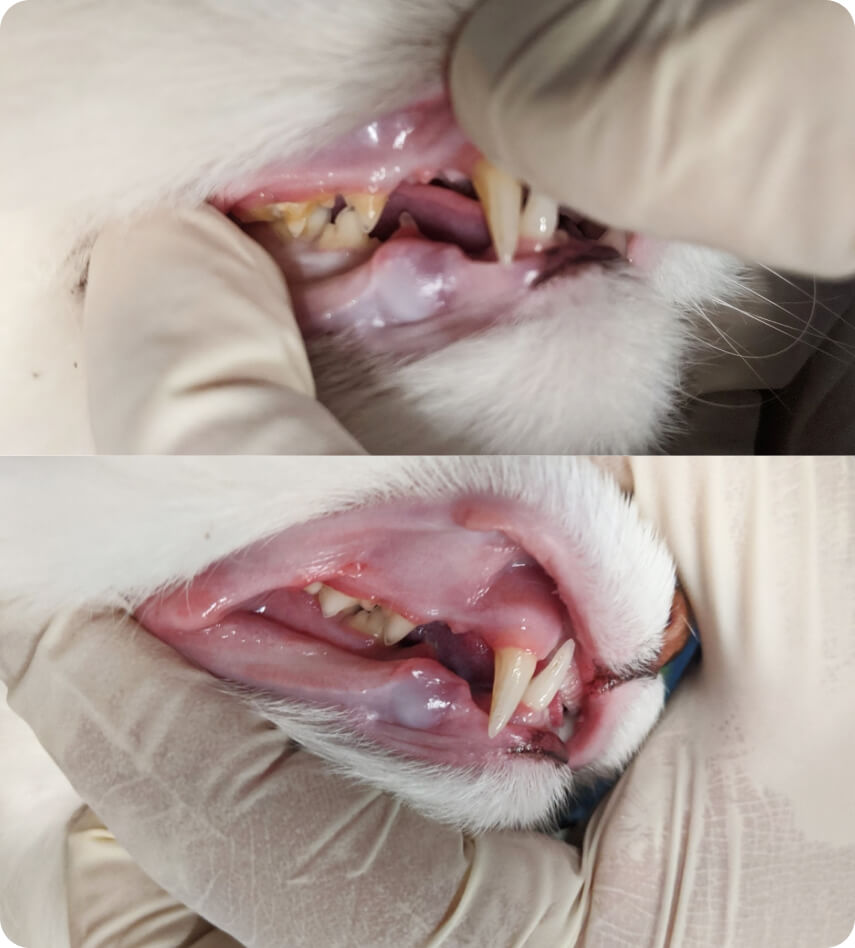
Book a professional cat teeth cleaning when you can see or smell any of the following:
- Breath that is there all day, not just after meals
- Yellow or brown buildup along the gumline
- Red or puffy gums
- Drooling, chewing on one side, or backing off hard food
Most cats do well with a professional cleaning about every six months, with home care filling the gap in between.
What Happens at a Cat Teeth Cleaning?
At HealthySmiles, a cat cleaning takes about 45 minutes in a calm, quiet room, with no anesthesia and no recovery time afterwards.
Every visit starts with an evaluation of your cat’s mouth and comfort level. If the team sees anything that needs a veterinarian, such as severe dental disease, you will hear that first and leave with a clear recommendation instead of a cleaning. For cats who are a good fit, the visit runs in five steps: calming and gentle handling, removing plaque and tartar, polishing every tooth, wiping away debris, and a rinse to finish.
You go home with a comprehensive dental report for your records, and cats fall into the lowest weight category, so you can check what a cleaning costs before you book. Cleanings are available at our pet dental spas across South Florida and in Cypress, Texas.
Fresh breath is the easy part to notice. Keeping it that way is what regular cleanings are for. With 16 years and more than 100,000 cleanings behind us, your cat is in gentle, experienced hands.
Frequently Asked Questions
Fish-based food is the usual reason, and that smell fades within an hour or so of a meal. Fishy breath that is there all day is more likely to be plaque and tartar along the gumline, which is worth having looked at.
Usually not, but it is a signal worth acting on. See a veterinarian promptly if the smell appears suddenly, smells sweet or like ammonia, or comes with drooling, bleeding gums, or a cat who is eating less.
Daily brushing with a cat-safe toothpaste makes the biggest difference, supported by dental treats, water additives or wipes. Home care manages the soft plaque; hardened tartar needs a professional cleaning before fresh breath lasts.
Many cats accept it with a slow introduction: a finger brush, a cat-safe toothpaste they can taste first, and a few seconds at a time on the outer surfaces. Short and calm beats thorough and stressful.
Teething between about three and six months can cause mild, temporary breath changes. If the smell is strong, or the gums look red and sore, have a veterinarian take a look.
About every six months for most cats, with daily home care in between. Cats who build tartar quickly may benefit from visits a little closer together.