







The Best Cat Dental Treats
December 22, 2021Receiving sweet kisses from your cat is a special treat, don’t let that moment be spoiled by stinky breath!
Make Cat Dental Treats A Part Of Your Daily Care Routine
At a glance
The best cat dental treats are crunchy, low calorie, and made with safe, natural ingredients; several on this list carry the VOHC seal. Treats help reduce plaque between visits, but they work best alongside at-home brushing and a professional cleaning every 6 months.
Cat dental treats can be given daily as part of your regular at-home brushing and oral hygiene routine to help keep your kitty’s kisses fresh and their mouth healthy. We created this list of the best dental treats for cats by researching dozens of brands & looking for key factors like overwhelmingly positive reviews and natural, safe ingredients. We have also included several cat dental treats specifically recommended by the Veterinary Oral Health Council (VOHC) to help inhibit the growth of plaque and tartar on feline teeth.
Greenies™ Cat Dental Treats
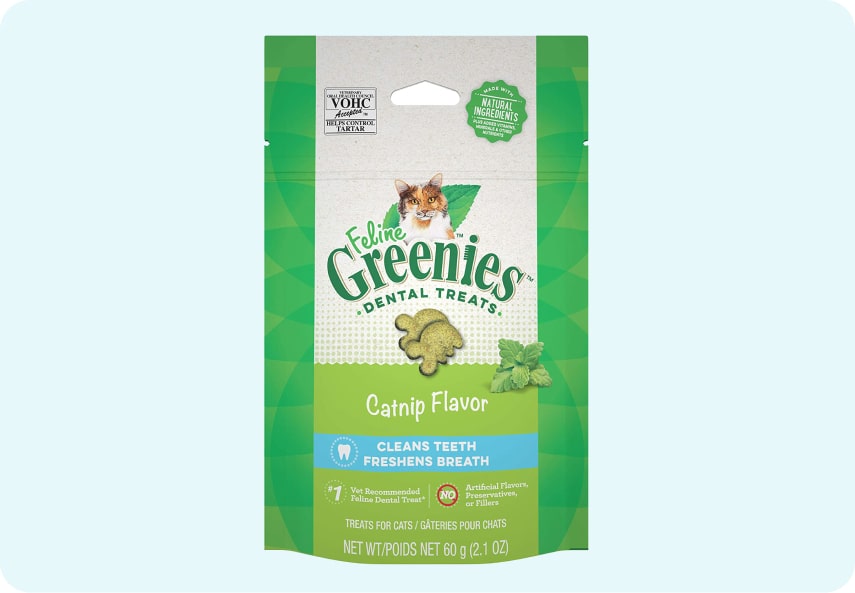
At only 2 calories per treat, Feline Greenies are nutritionally complete and intended to be given daily. The crunchy texture helps remove plaque and tartar from your cat’s teeth, and they’re available in a variety of flavors perfect for even the pickiest kitties! Additionally, Greenies cat dental treats carry the VOHC registered seal.
Wellness Kittles™ Cat Treats
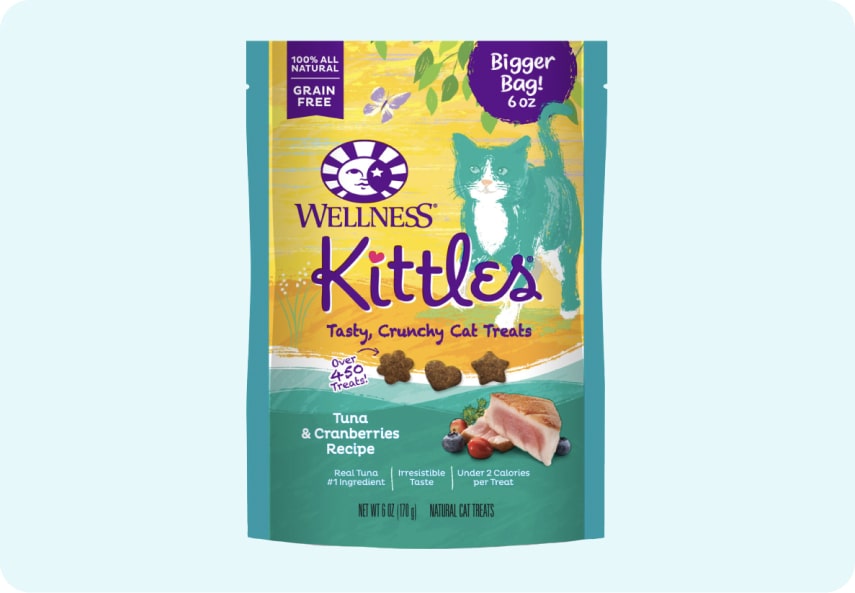
Wellness Cat Treats are low calorie and contain no meat by-products, artificial flavors, colors, or preservatives. They have a crunchy texture that is helpful in reducing the buildup of plaque, and even picky cats will love the variety of flavors, all with meat as the first ingredient!
Purina DentaLife® Cat Treats
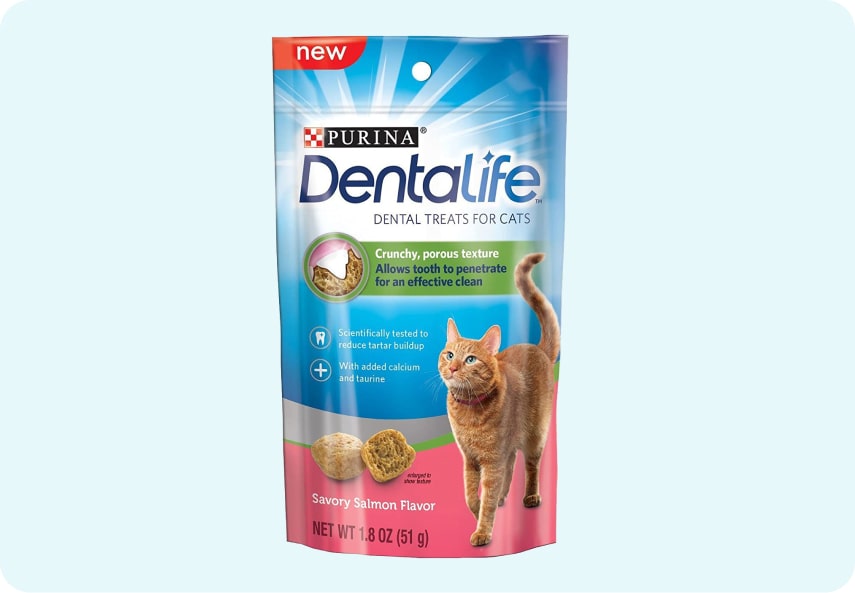
DentaLife dental treats for cats are VOHC approved and specially designed with a porous texture that surrounds all sides of your cat’s teeth, helping to scrub away tartar buildup as they bite down.
C.E.T.® IntelliDent™ Cat Bites
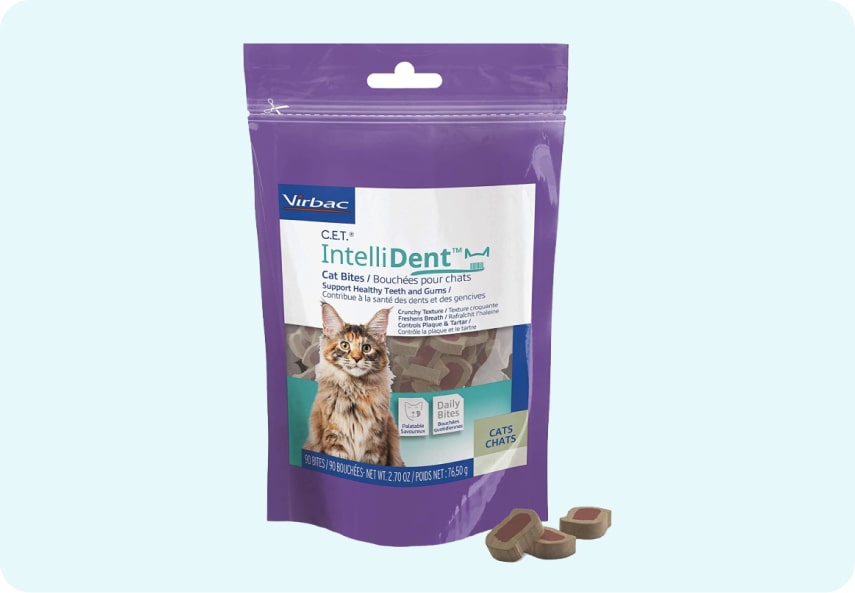
Crunchy and flavorful IntelliDent Cat Bites, work with your cat’s natural chewing action to help reduce plaque and tartar buildup. These highly rated cat treats include no artificial preservatives, are low in calories, and use natural flavoring, making them a safe choice for daily use.
Natural Homemade Cat Treats
If you prefer to make your own treats or have very picky feline companions, this simple 3 ingredient recipe is easy to make, uses items you may already have in your pantry, and the crunchy texture may help scrub away tartar and plaque from your cat’s teeth. For added bad breath fighting properties, try adding a bit of fresh parsley to the treat mixture.
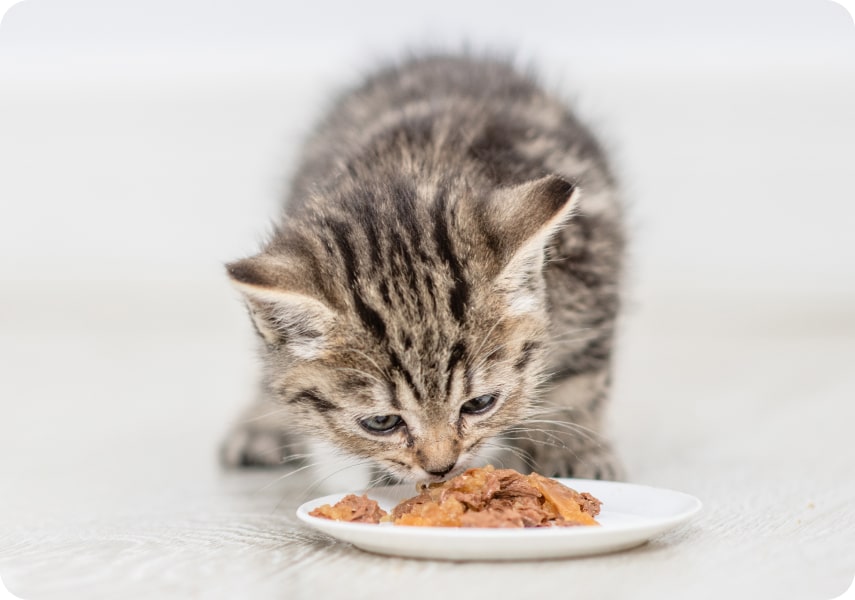
Cat dental treats aren’t a replacement for regular teeth cleanings
Whether you buy your cat’s dental treats at the store or make them at home, it’s important to remember that they are only one part of a balanced oral care routine for your feline friends. Regular at-home brushing and twice-yearly professional cat dental cleanings are also highly recommended to help keep your cat’s purrly whites shining and healthy!
Curious what a calm, spa-style cleaning looks like for cats? See how cat teeth cleaning works.
Note: If your cat has existing health issues or requires a special diet, we encourage you to speak with your veterinarian to determine which treats are best for your furry friend!
When it’s time for those twice-yearly cleanings, book a cleaning near you.
Frequently Asked Questions About Cat Dental Treats
Do cat dental treats actually work?
Yes, as part of a routine. Crunchy dental treats help reduce plaque as cats chew, especially VOHC-accepted options, but they work best alongside brushing and professional cleanings.
Can dental treats replace teeth cleanings for cats?
No. Treats can slow plaque buildup, but they cannot remove tartar that has already hardened. At-home brushing plus a professional cleaning every 6 months is the full routine.
What should I look for in a cat dental treat?
Look for the VOHC seal, low calories per treat, crunchy texture, and natural ingredients without artificial preservatives. If your cat has health issues or a special diet, check with your veterinarian first.