






Does Dog Dental Powder Work?
October 26, 2026QUICK ANSWER
Yes, some dog dental powders can help. Certain ingredients, like the seaweed Ascophyllum nodosum, have been studied for reducing plaque and tartar buildup with daily use. Dental powder works best as one tool in an at-home routine alongside brushing and professional cleanings, not as a replacement for either.
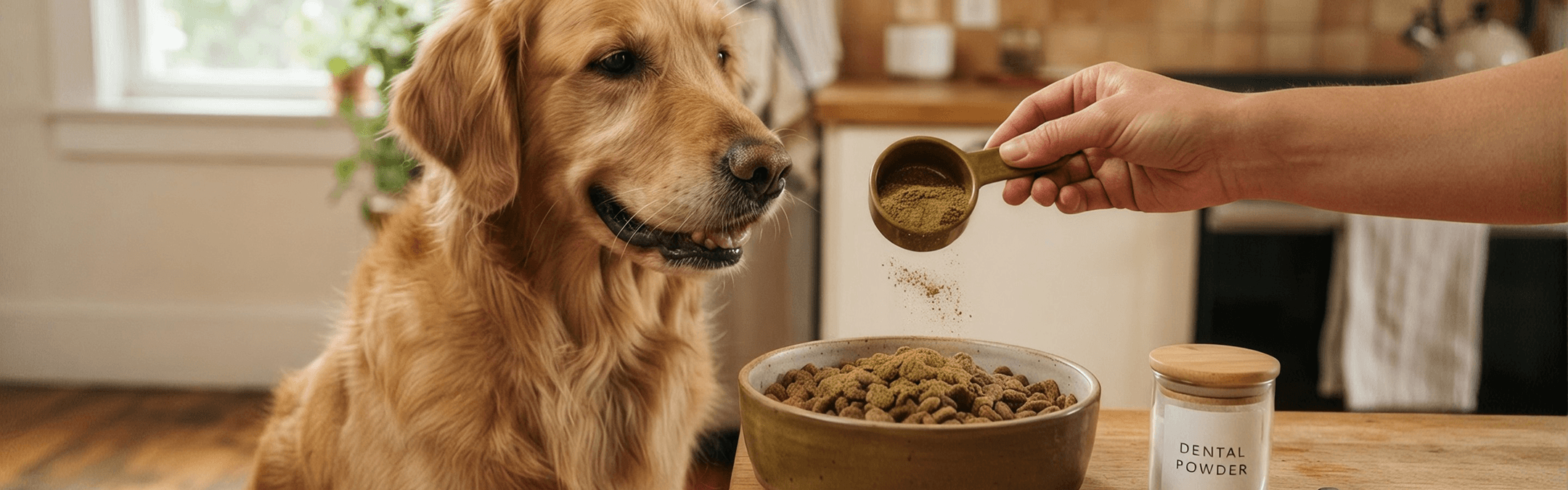
If you’ve been looking for easier ways to keep your dog’s teeth cleaner and breath fresher at home, you’ve probably come across dog dental powders at pet stores or online. Most dental powders are simply sprinkled onto your dog’s food as part of an at-home dental-care routine.
But does dog dental powder actually work?
The answer is: Yes, some dental powders may help! They can support plaque control and fresher breath, but not all dental powders are created equal.
What Is Dog Dental Powder?
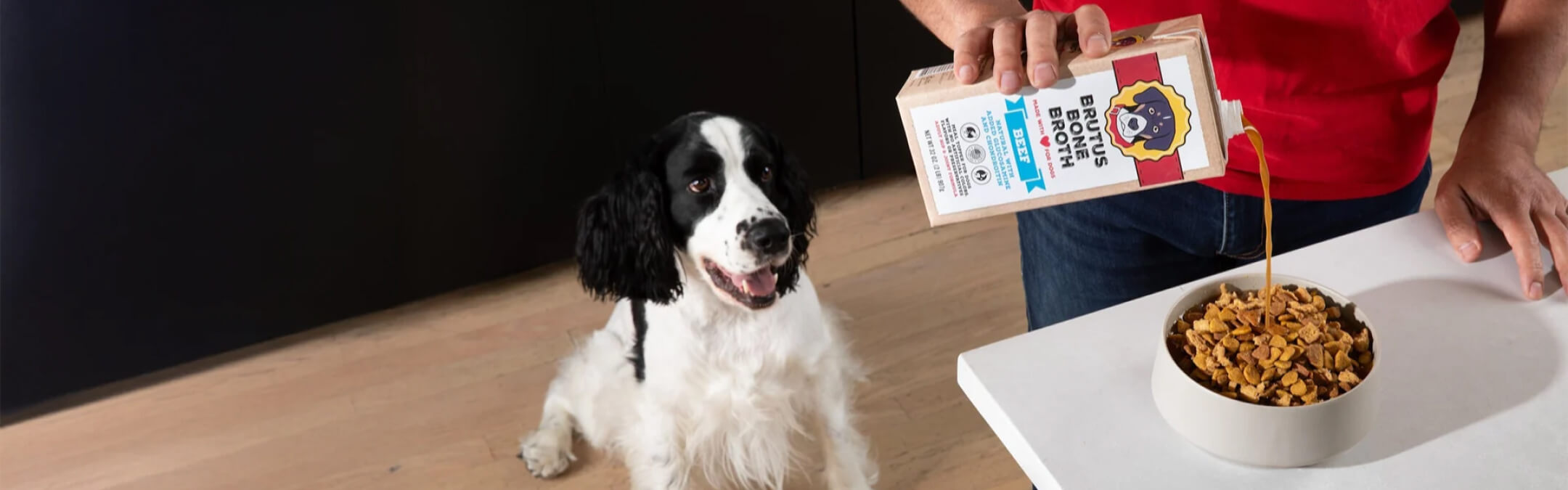
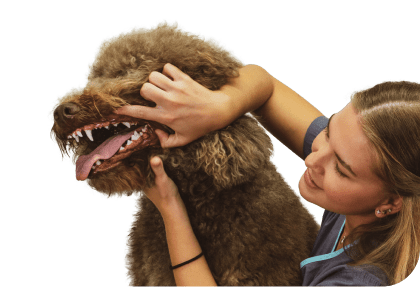
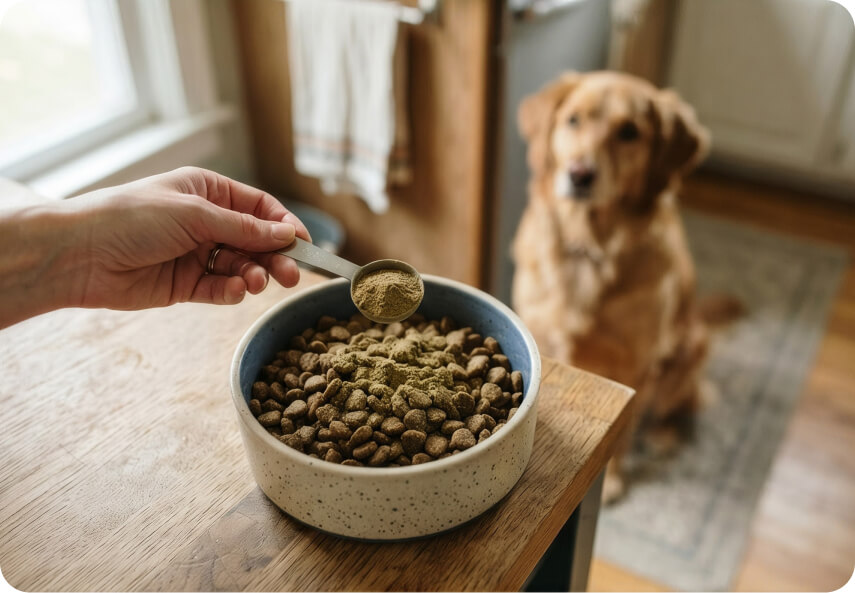
Dental powder for dogs is generally a food additive designed to support oral health without brushing. Depending on the product, it may contain ingredients such as seaweed or kelp, enzymes, probiotics, or other ingredients that support a healthier mouth and help manage plaque, bacteria, or bad breath.
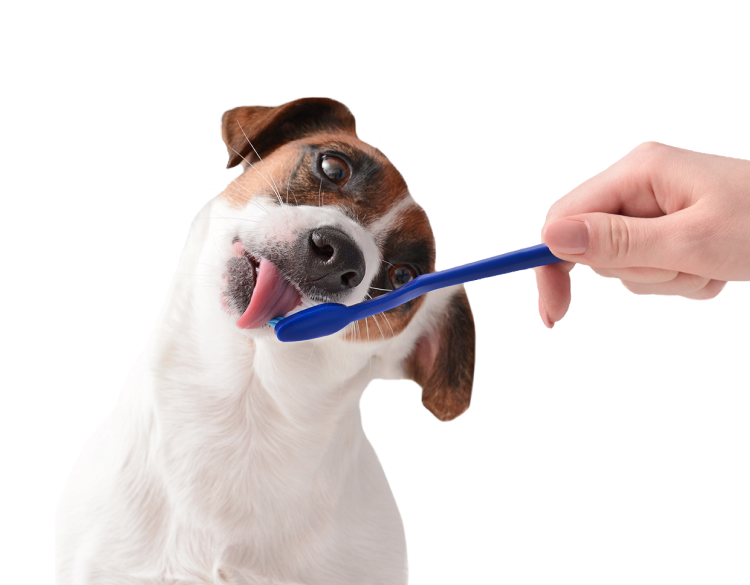
The biggest appeal is convenience, especially for pet parents who find it difficult to brush their dog’s teeth regularly. After all, not every pup is excited to see a toothbrush coming their way!

Is There Science Behind Dental Powder for Dogs?
Yes, there is research behind certain ingredients found in dog dental powders. One ingredient that has been studied is a brown seaweed called Ascophyllum nodosum, which is used in some pet dental products.
In one randomized, controlled study, researchers found that daily use of an oral product containing Ascophyllum nodosum following a professional dental cleaning helped reduce the accumulation of plaque and calculus over 90 days. Researchers also found lower levels of compounds associated with bad breath.
That’s encouraging, but it doesn’t mean every dental powder will produce the same results. Formulations and ingredients vary, and research on one ingredient or product doesn’t necessarily apply to every powder on the shelf.
How Do I Choose a Dental Powder for My Dog?
With so many dental products available, it can be hard to know where to start. If you’re not sure what your own pup’s teeth need right now, our free pet dental assessment is a quick five-question place to begin. Beyond that, rather than relying only on advertising or online reviews, pet parents can look for dental products with independent evidence supporting their claims.
The Veterinary Oral Health Council (VOHC) awards its Seal of Acceptance to products that meet its standards for helping control plaque, tartar, or both. Its accepted-products list includes some powder-format dental products.
And, of course, your veterinarian can be a great resource. You can ask them whether a particular product or ingredient is appropriate for your dog.
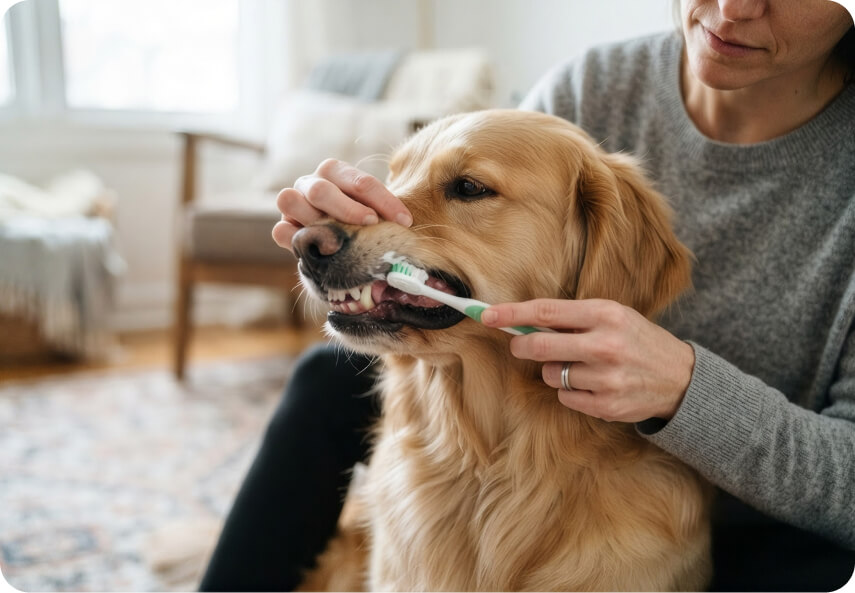
Dental powder is best thought of as one more helpful tool in your dog’s at-home dental-care routine, not a replacement for professional cleanings or other routine care.
Brushing remains an important way to manage plaque at home. Dental chews, wipes, and other dental products may also help depending on your dog’s needs and what your pup is comfortable with.
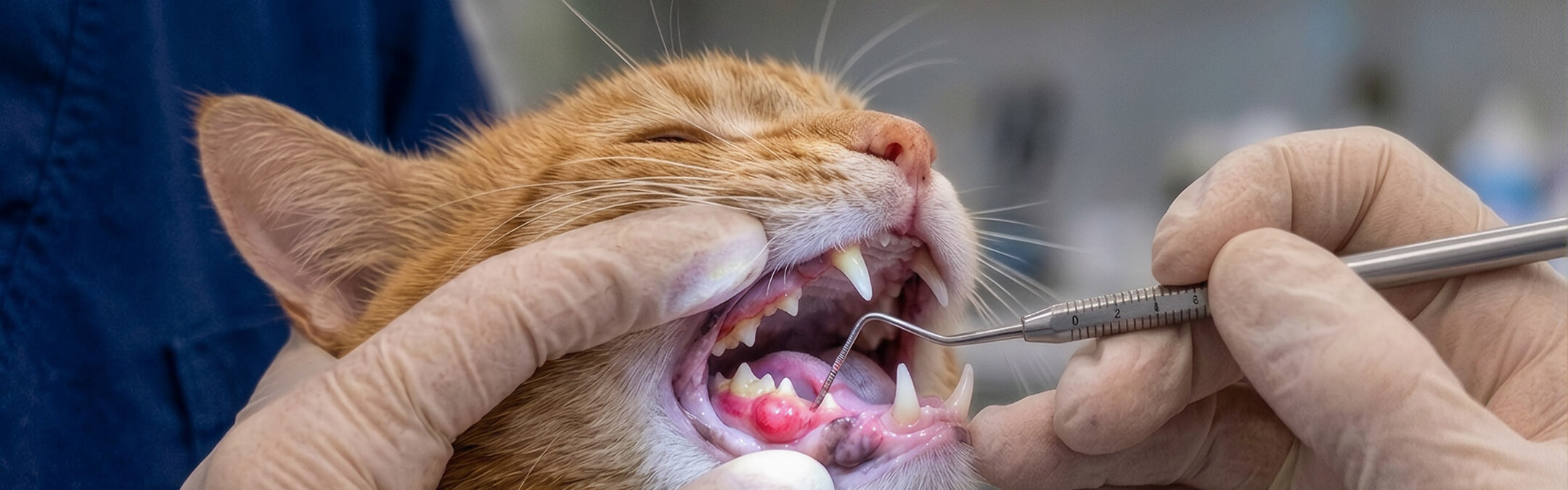
Once tartar has hardened on the teeth, at-home products aren’t designed to simply make it disappear. A professional dental cleaning may be needed to properly remove hardened tartar and address your dog’s oral health needs.
At HealthySmiles, we love seeing pet parents take an active role in their dog’s dental health. Whether it’s brushing, dental chews, wipes, or dental powder, the goal is the same: help manage plaque between cleanings, support fresher breath, and create an oral-care routine that actually works for you and your pup.
Because when dental care is simple enough to become part of your routine, everyone has something to smile about.
Home care works best alongside regular professional cleanings. At Healthy Smiles, our cleanings are done without anesthesia, so there’s no recovery time, just cleaner teeth and fresher breath. With 16 years of experience and more than 100,000 cleanings behind us, your pup is in gentle, experienced hands.
Frequently Asked Questions
Some do! Powders containing studied ingredients like the seaweed Ascophyllum nodosum have been shown to help reduce plaque and tartar buildup with daily use. They work best as part of a routine that includes brushing and regular professional cleanings.
Many dogs benefit from dental chews, especially products carrying the VOHC Seal of Acceptance for plaque or tartar control. Choose a size appropriate for your dog, and think of chews as a helpful supplement to brushing and professional cleanings, not a replacement.
Dental wipes can help remove plaque from the visible surfaces of your dog’s teeth, and some dogs tolerate them better than a toothbrush. They can’t reach between teeth or below the gumline, so pair them with regular professional cleanings.
The best way to manage plaque is brushing your dog’s teeth 4 to 6 times per week with a toothpaste made specifically for dogs and cats (never human toothpaste, which can be harmful to pets). Products and dental chews containing parsley, coconut oil, or kelp can also help reduce bacteria, plaque, and tartar. One thing we don’t recommend is scraping tartar off at home, it can damage enamel and lead to bleeding gums. To keep buildup to a minimum, stay on top of non-anesthetic dental cleanings 2 to 3 times a year with a reputable, qualified provider.