









Red or Swollen Gums in Cats
October 19, 2026At a glance
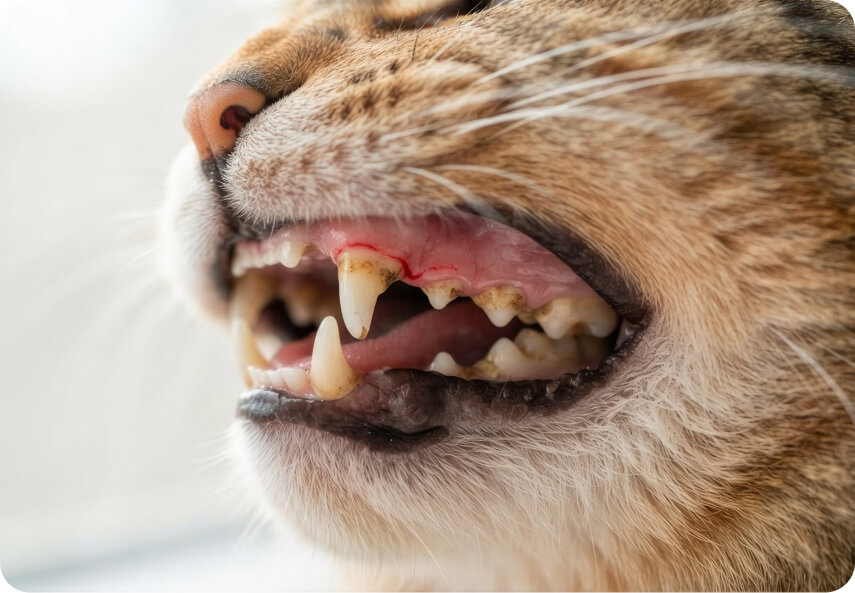
When looking at your cat’s gums, healthy gums should generally look pale pink and smooth. A thin red line along the teeth can be a sign of early gingivitis and plaque buildup. Regular home care and professional teeth cleaning can help manage plaque and tartar, but gums that bleed, look very swollen, or come with changes in eating or behavior should be evaluated by a veterinarian.
Gums are easy to miss. Most pet parents look at teeth, not at the thin strip of tissue around them, and that strip is usually where the first sign of trouble shows up.
The good news is that changes along your cat’s gumline can sometimes be visible before you notice changes in their behavior. Knowing what to look for can help you recognize when it may be time for home care, a professional cleaning, or a visit to your veterinarian.
Not sure what you are looking at? The free 60-second Pet Dental Assessment walks you through a few questions and gives you a quick read.
What Do Healthy Cat Gums Look Like?
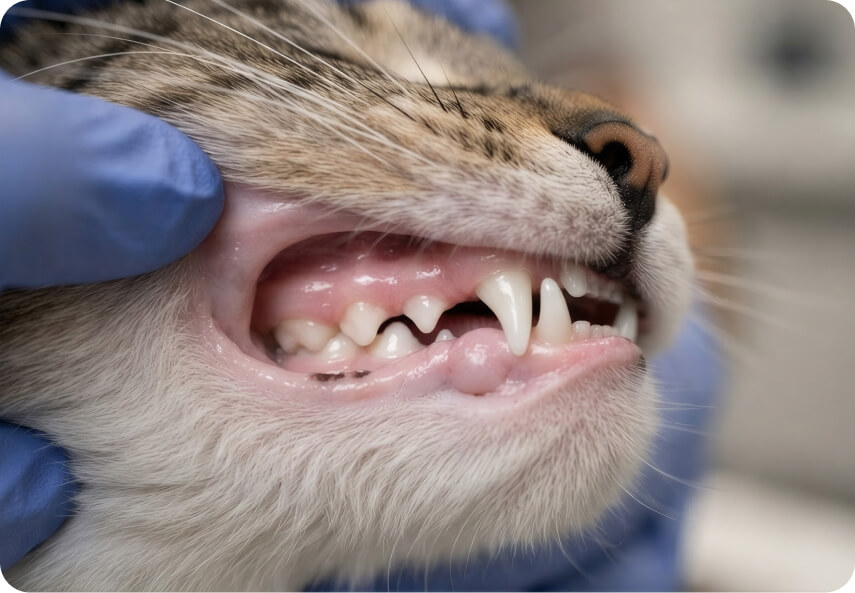
Healthy gums are pale pink, smooth, and sit flat against the teeth. Some cats have natural dark pigment spots, which are perfectly normal and do not change with time.
Here is how to take a look, without turning it into a wrestling match. Wait until your cat is relaxed, gently lift the lip on one side for a second or two, and look at the line where the gum meets the tooth. One side at a time, a few seconds each, is plenty. If your cat objects, stop and try again later.
What Causes Red Gums in Cats?
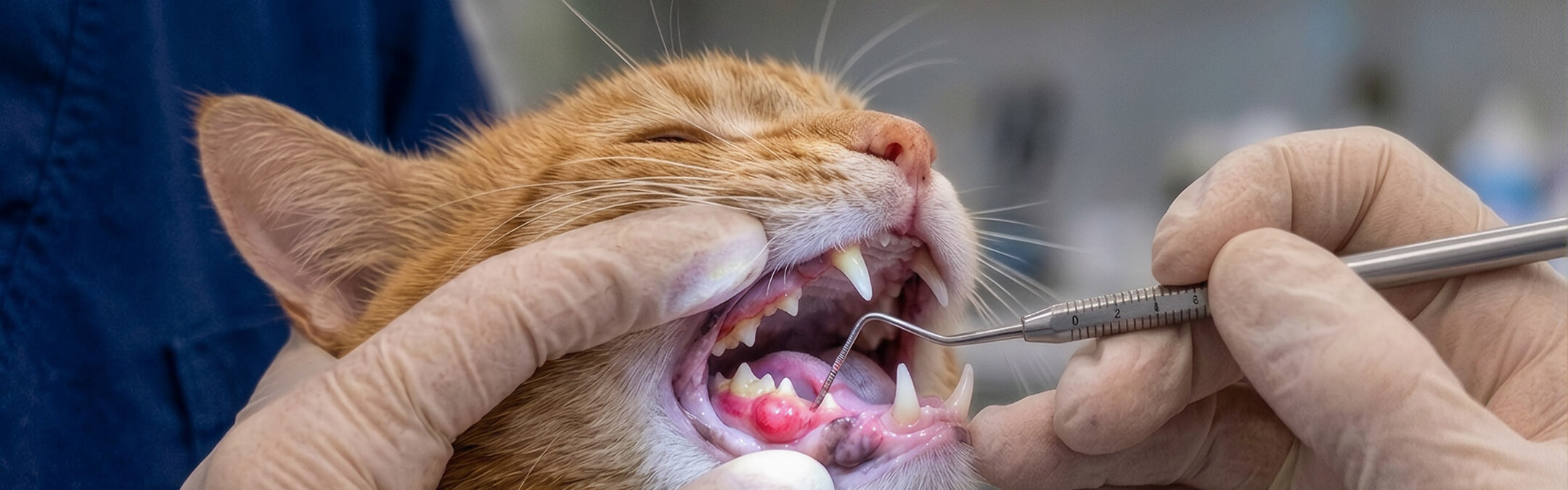
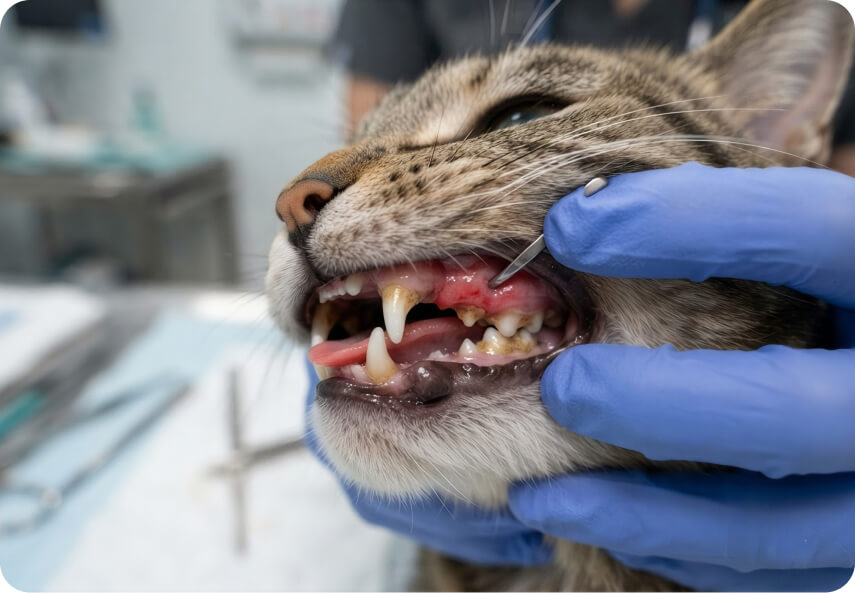
Plaque buildup along the gumline is a common reason gums can become red or irritated. Plaque is the soft film that forms on teeth every day, and the bacteria in it can irritate the gum edge. The gum may become red or slightly swollen, which can be an early sign of gingivitis and periodontal disease.
Other things can cause red or swollen gums in cats:
- Teething, in kittens between about three and six months, when gums can look pink and tender for a short while
- An injured tooth, where the redness is concentrated around one tooth rather than spread along the line
- Widespread inflammation that covers much of the mouth, which is a veterinary matter rather than a maintenance cleaning
- Health conditions beyond the mouth, which your veterinarian is the right person to rule out
What Does Gingivitis Look Like in Cats?
Early gingivitis can be subtle. Look for a thin red line tracing the gumline, slightly puffy edges where the gum meets the tooth, and yellow or brown buildup on the tooth itself.
As it progresses, the signs may be more noticeable:
- Redness that spreads further up the gum rather than staying as a line
- Gums that bleed a little during brushing, or spots of blood on a toy or in the water bowl
- Bad breath that is there all day, not only after meals
- Drooling, pawing at the mouth, or chewing on one side
- Eating more slowly, picking at food, or preferring soft food over kibble
Cats are good at hiding mouth discomfort, so it can be helpful to take a quick look at the gumline every few weeks is worth the effort.
Are Bleeding Gums in Cats Serious?
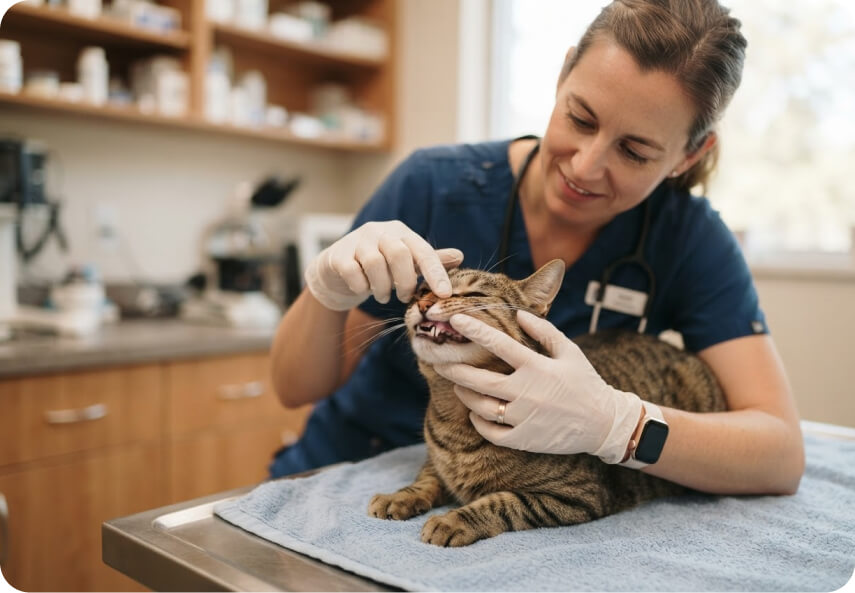
Bleeding gums should always be taken seriously. A touch of blood during brushing can occur with early inflammation, but gums that bleed on their own, bleed often, are accompanied by changes in eating or behavior should be seen by a veterinarian rather than booked for a cleaning.
The same goes for very swollen gums, redness across the whole mouth, or a cat who flinches when the mouth is touched. A veterinarian can complete a full oral examination, take X-rays if needed, and determine whether treatment is needed.

At home dental care can help manage plaque and support your cat’s oral health:
- Brush regularly with a cat-safe toothpaste and a soft brush or finger brush. If your cat’s gums appear painful or bleed, talk with your veterinarian before brushing.
- Use products made for cats, such as dental treats and water additives designed to reduce plaque.
Three things to avoid: human toothpaste, which is not safe for cats to swallow; home remedies like hydrogen peroxide or human mouthwash; and scraping at tartar yourself, which can damage the gum and the tooth surface.
Home care can help manage new plaque, but once tartar has hardened on the teeth, professional teeth cleaning is the most effective way to remove it. Red, swollen, painful, or bleeding gums may also need to be evaluated by your veterinarian.
When Is Cleaning the Right Next Step?
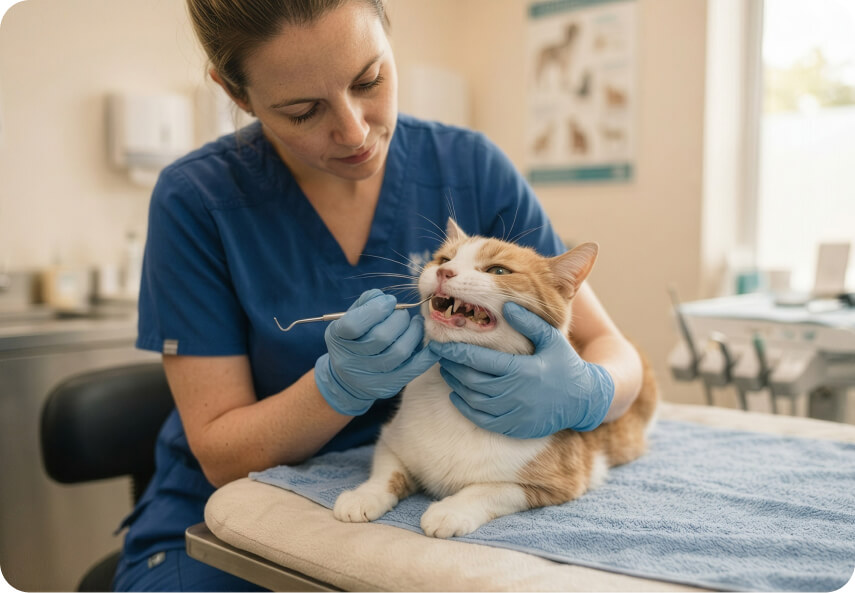
If you can see plaque or tartar building up on your cat’s teeth, it may be time to consider a professional teeth cleaning. For appropriate cats, professional cleaning can help remove plaque and tartar and support preventive dental care.
See a veterinarian first if you notice bleeding, obvious pain, a cat who has gone off food, or redness that covers much of the mouth.
If you are not sure which group your cat is in, that is fine. Every visit at HealthySmiles starts with an evaluation, and if the team sees something that needs a veterinarian, our team will let you know and recommend veterinary care rather than proceeding with a cleaning.
What Happens at a Cat Cleaning?
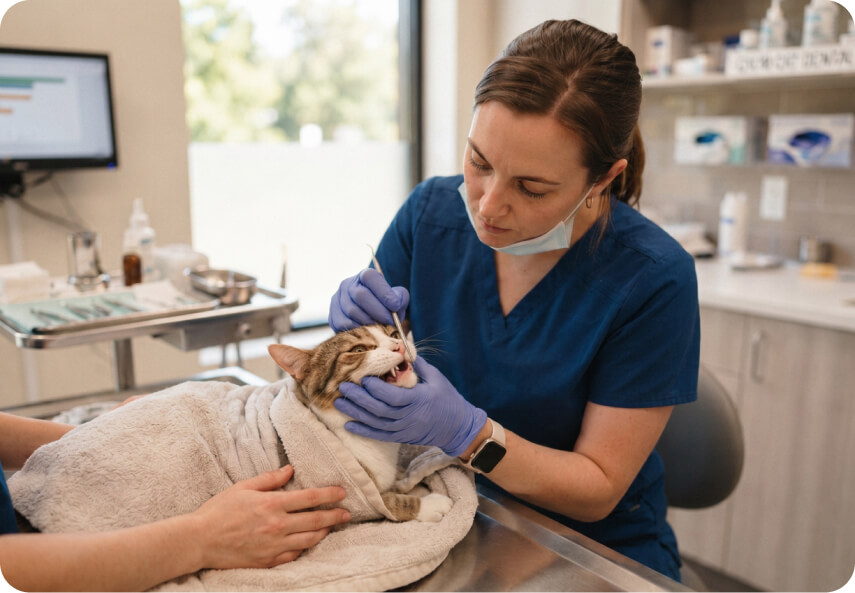
A non-anesthetic cat dental cleaning typically takes about 45 minutes in a calm, quiet room, with no anesthesia and no recovery time.
After the evaluation, our team uses gentle handling techniques while removing visible plaque and tartar and polishing the teeth.
You go home with a comprehensive dental report documenting what we observed during the cleaning, along with home-care recommendations.
Most cats do well with a cleaning about every six months, with daily home care in between. Cleanings are available at our pet dental spas across South Florida and in Cypress, Texas.
Staying on top of plaque and tartar can help make dental care a regular part of your cat’s preventive routine. With 16 years and more than 100,000 cleanings behind us, your cat is in gentle, experienced hands.
Frequently Asked Questions
Pale pink, smooth, and flat against the teeth, with no puffiness along the gumline. Dark pigment spots are normal in some cats and do not change over time.
A red line right where the gum meets the tooth is usually early gingivitis caused by plaque sitting along the gumline. Redness concentrated around one tooth, or spread across the whole mouth, is worth a veterinary look.
Caught at the early stage, gum inflammation often settles once the plaque and tartar causing it are removed and daily home care keeps new plaque down. Once inflammation is advanced, treatment is a veterinary decision.
There is no home remedy that treats swollen gums. Daily brushing with a cat-safe toothpaste and plaque-reducing products helps prevent them. Avoid hydrogen peroxide, human mouthwash and human toothpaste, and never scrape at tartar at home.
Cat-safe toothpaste helps control the plaque that irritates gums, which is prevention rather than treatment. It will not clear inflammation that has already set in.
Often yes, when the inflammation is early and your cat is comfortable, since removing plaque and tartar takes away the cause. Every visit begins with an evaluation, and cats who need a veterinarian are referred rather than cleaned.